
Spring Snow Depth On Niwot Ridge
Rising temperatures are likely to affect snowpack volume (Mote et al., 2018, 2005), advance and prolong snowmelt seasons (Musselman et al., 2017), and lead to wetter, heavier snow that is less easily redistributed (Badger et al., 2021). To capture the effect of rising temperatures on Niwot Ridge, researchers have measured snow depth on Niwot Ridge each May since 1992. To learn more, explore our long-term snow depth data, visualized below.
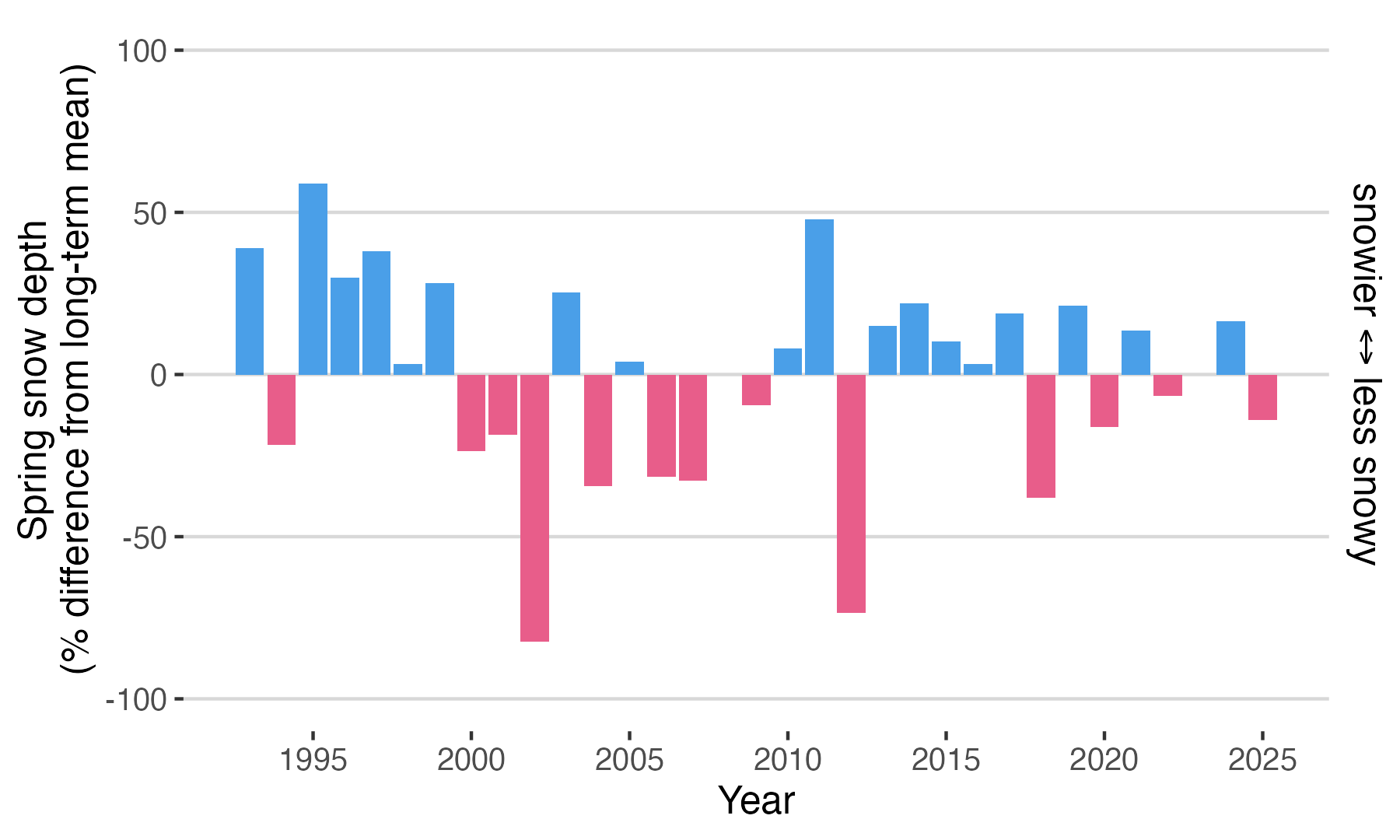
Annual Anomalies in Spring Snow Depth
The below figure visualizes annual deviation in spring snow depth from the long-term mean in an alpine dry meadow on Niwot Ridge. Positive values indicate deeper snow than average while negative values indicate a shallower snowpack than average.
Download Snow Depth Data and Code
The long-term data and code used to make the figures on this page are publicly available on GitHub and the Environmental Data Initiative Portal.
*Figures, content, and data on this page may be used with proper citation.
about Spring Snow depth Data from Niwot Ridge
Field Site:
The spring snow depth data visualized on this page is collected in an alpine dry meadow on the Saddle of Niwot Ridge (Figs. 1 and 2). The study site— known as the Saddle grid— is arranged in a grid of 8 rows of stakes in an east/west direction and 11 rows of stakes in a north/south direction, for a total of 88 stakes located 50 m apart (Fig. 3).

Figure 1: Climate stations of the Niwot Ridge LTER. Blue stars indicate the location of the subalpine (C1), Saddle, and alpine (D1) climate stations.
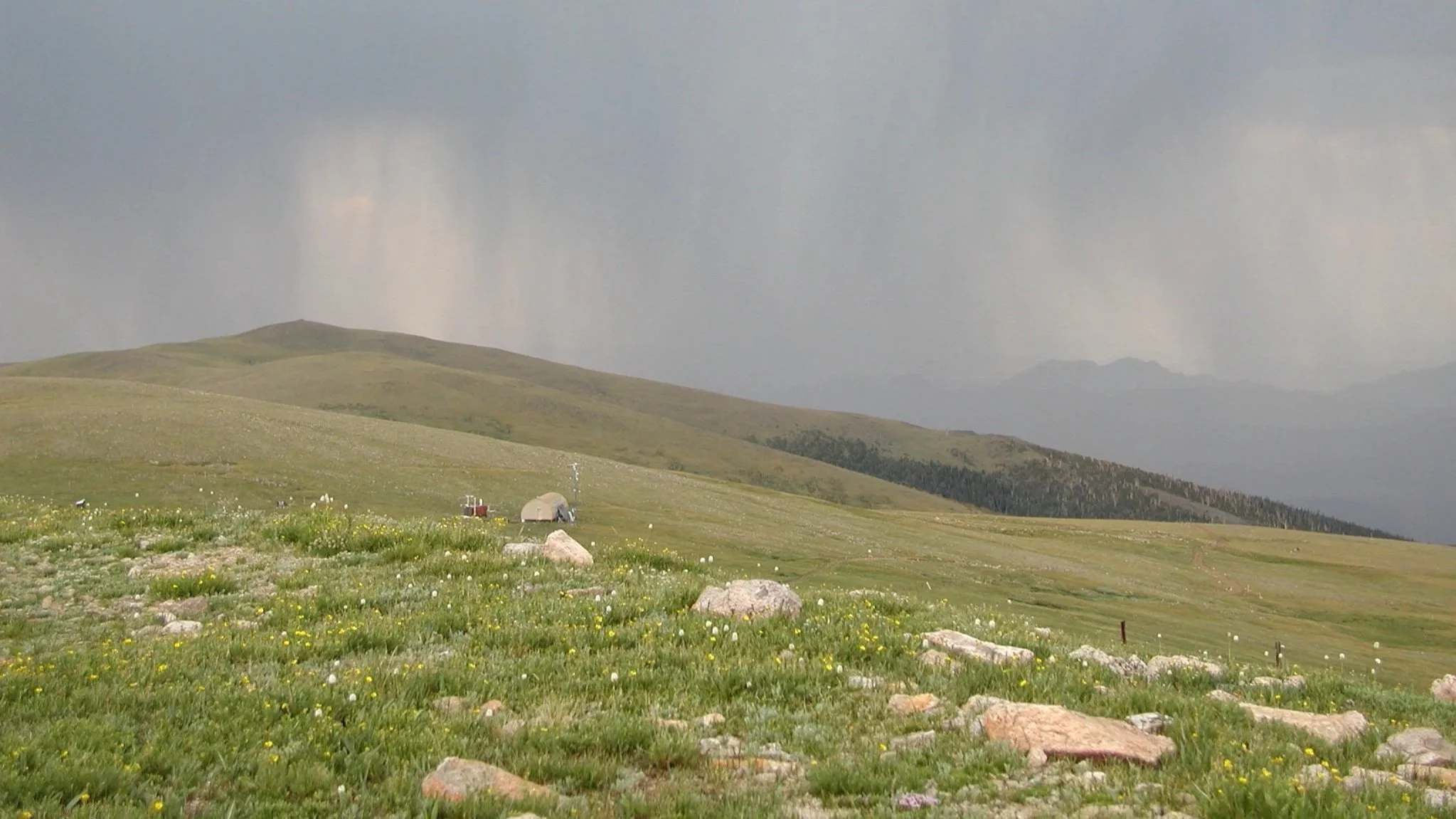
Figure 2: The Saddle on Niwot Ridge. The Niwot Ridge saddle is located 5.6 km from the Continental Divide. The area is located along a ridge-top, but in a shallow saddle between the east and west knolls. There is a 10,000 sq ft tundra laboratory on the south side of the saddle, which serves as a staging area for research in all weather conditions.
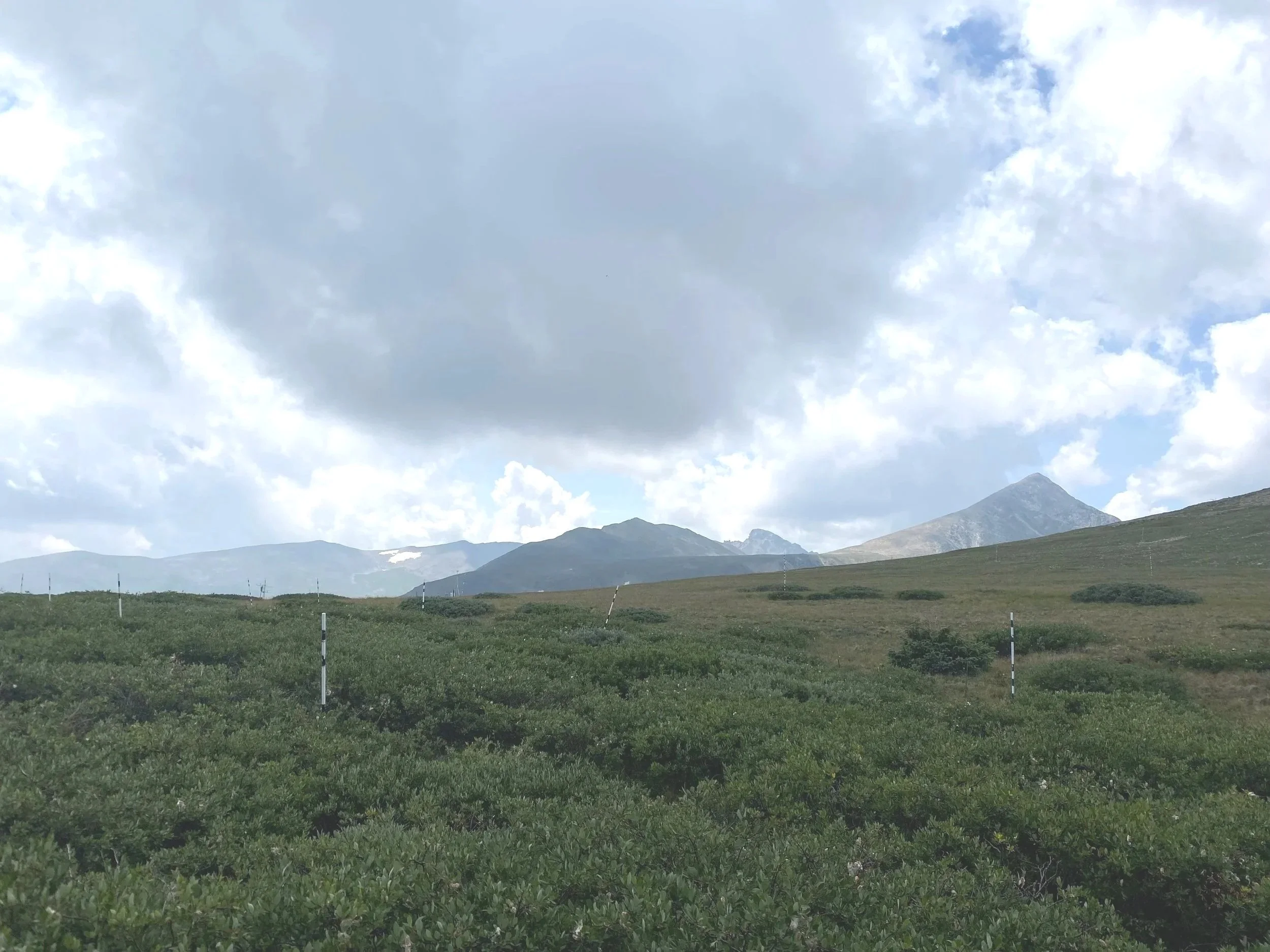
Figure 3: Black and white stakes mark the location of 88 sampling locations in the Saddle grid on Niwot Ridge. Photo by Miles More.
Data Collection:
Each spring, researchers from the Niwot Ridge LTER measure the snow depth in the Saddle grid of Niwot Ridge. This survey, which dates back to 1982, captures the depth of snow near each of the 88 Saddle grid stakes. Initially, the goal of this survey was to capture snow cover in the Saddle grid year round. As such, the annual survey began in the fall with the first snowfall and ended in the spring when there was no snow left to sample. In 2020, the goal of the survey was reassessed and the timing of sampling changed accordingly. The goal became to capture snow depth from peak snow cover (which typically happens in mid-May) through melt out. As such, the spring snow survey now begins in early May (Figs. 4 and 5), and researchers sample snow depth two times per week until snow depth reaches zero.
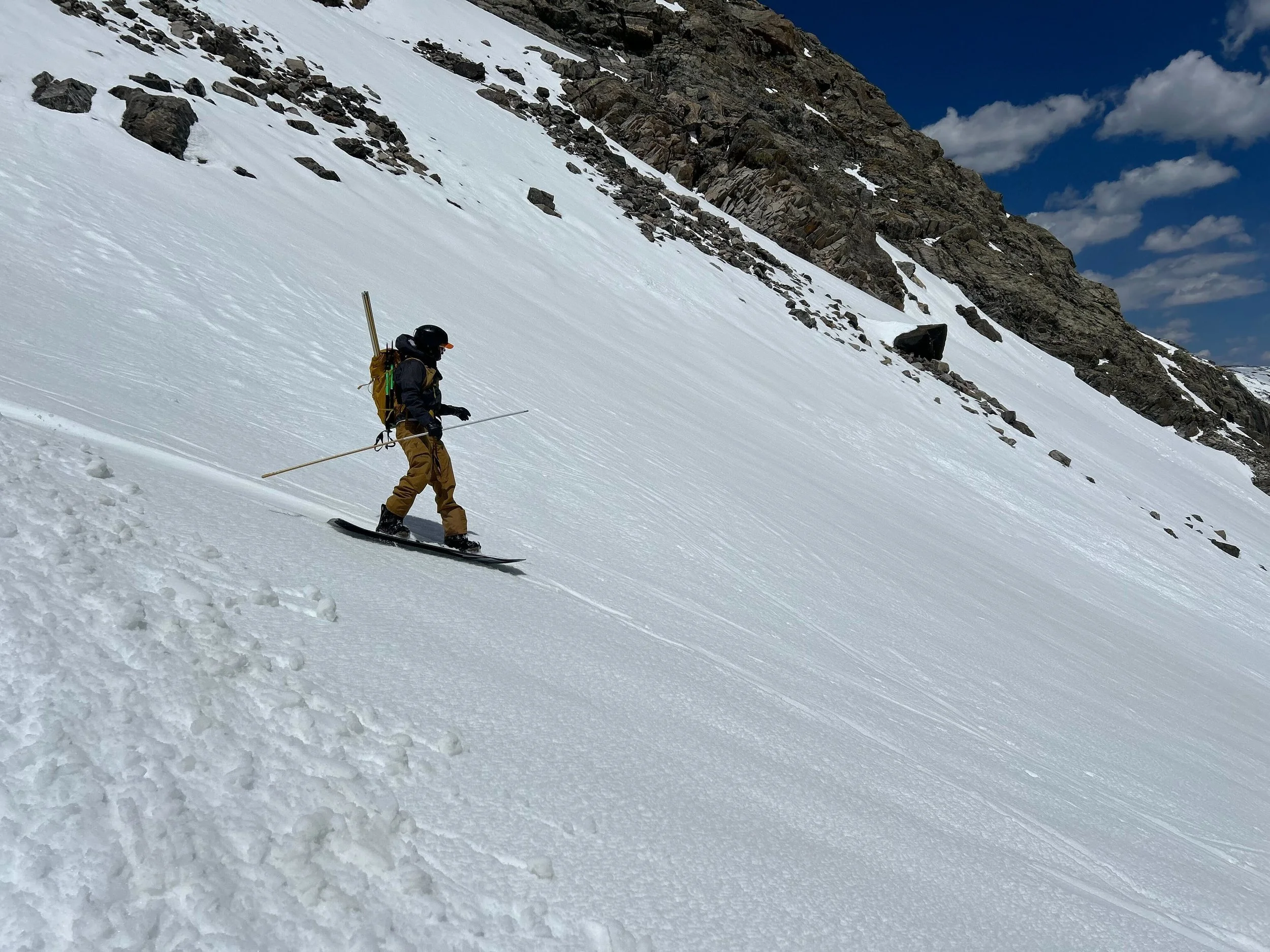
Figure 4: Researchers traverse snowy terrain on skis or snowboards to measure spring snow depth on Niwot Ridge. Photo by Jen Morse.
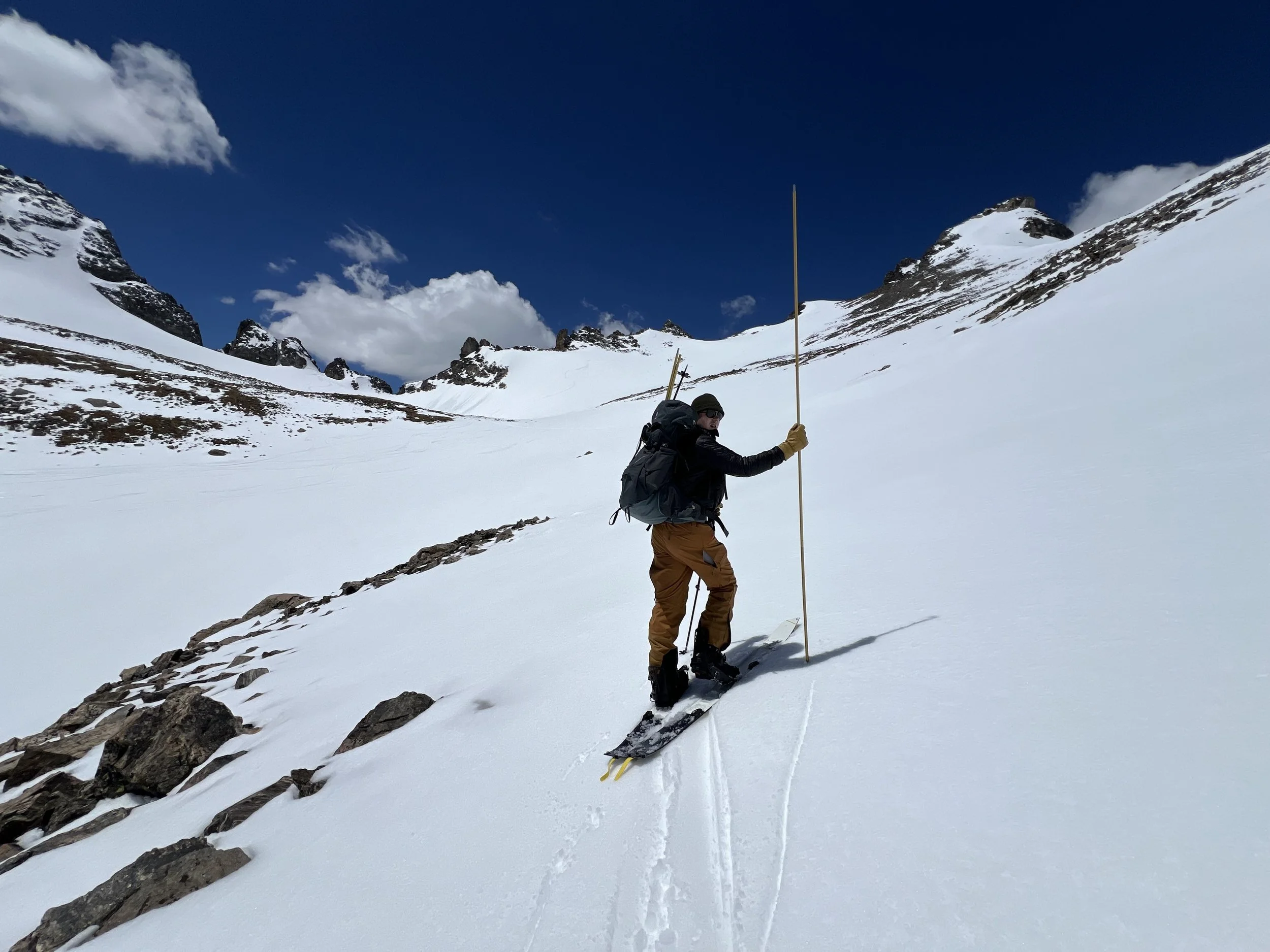
Figure 5: Researchers use a long probe inserted into the snowpack to measure snow depth on Niwot Ridge. This method is used along a wide elevation gradient that includes the Saddle grid study site. Photo by Jen Morse.
How To Cite Data and Figures On this page
The Niwot Ridge LTER welcomes use of the figures and content on this page when accompanied by the following citation:
Niwot Ridge LTER. 2026. Data Dashboard. Retrieved from https://nwt.lternet.edu/spring-snow-depth.
We also welcome use of the data linked to on this page when accompanied by the following citations:
Saddle Snow Depth:
Walker, D., J. Morse, and Niwot Ridge LTER. 2025. Snow depth data for Saddle grid, 1992 - ongoing. ver 22. Environmental Data Initiative. https://doi.org/10.6073/pasta/373278a850606e58d0cee389fbbad88b
These data packages are hosted on the Environmental Data Initiative Data Portal. Data packages include additional detailed information about where and how spring snow depth data are recorded and processed.
Contact Us
If you have questions about the data presented on this page, please email the Niwot Ridge LTER. To learn more about research, education, and outreach conducted by the Niwot Ridge LTER, please visit our website.