
Integrating experimental and observational approaches facilitates scaling species interactions to biodiversity patterns
Huxley, J. D., Bowman, W. D., & Spasojevic, M. J. (2026). Integrating experimental and observational approaches facilitates scaling species interactions to biodiversity patterns. Functional Ecology. https://doi.org/10.1111/1365-2435.70372
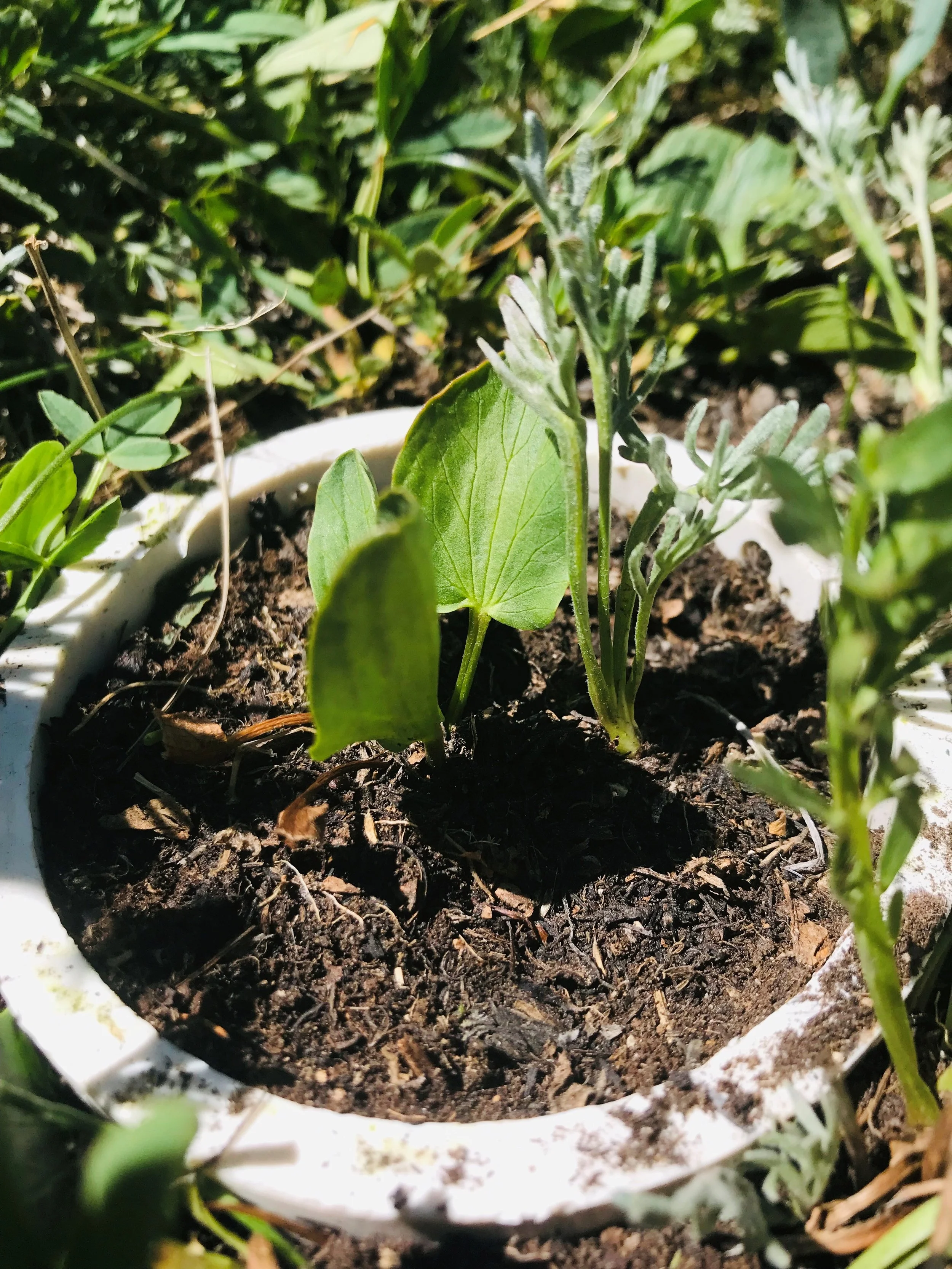
Interaction arenas used to isolate species interaction effects. Figure credit: Jared Huxley
Abstract
To investigate how niche and fitness differences determine the outcome of species interactions and shape local biodiversity patterns, research has typically focused on either simplified experimental systems that test specific mechanisms or observational studies where processes are inferred from functional trait or phylogenetic patterns. While each approach has yielded valuable insights, both have drawbacks, and few studies have integrated these approaches to connect mechanistic processes with observed biodiversity patterns. To this end, we paired a 3-year neighbour removal experiment involving 22 species pairs with spatial point pattern analyses conducted in 8 spatially explicit 2 m × 2 m plots arrayed across a stress-resource gradient in the alpine tundra of Colorado. By employing this dual approach of experiment and observational study, we can test the role of trait dissimilarity (limiting similarity) and trait hierarchies (traits that differ from a competitive optima) as mechanisms shaping plant performance and then map these mechanisms directly onto species co-occurrence patterns in surrounding communities. In the neighbour removal experiment, we found that species interactions were largely determined by hierarchical competition based on plant size. These same traits were also most important for predicting patterns of pairwise spatial associations across community types in the observational study, but also highlighted how composite trait metrics like principal component axes can obscure the role of individual traits in mediating species interactions. Moreover, the spatial point pattern analysis also identified community specific context dependence missing from the experimental approach. Specifically, in the more resource rich community, hierarchical differences in plant height and dissimilarity in leaf area had the largest effects on pairwise spatial association patterns, while in the more resource poor communities we found the reverse, with dissimilarity in height and hierarchical differences in leaf area having the largest effects. By coupling process-based experiments and pattern-based observational approaches, we were able to experimentally test coexistence mechanisms, demonstrate how these mechanisms manifest as functional trait patterns in the surrounding natural community and highlight context dependent responses based on local abiotic conditions. Taken together, our results suggest that future research should prioritize process-to-pattern mapping by coupling mechanistic experiments with observational studies.