
Ten simple rules for team synthesis in ecological research
Elmendorf, S. C., Maurer, G. E., Lyon, N. J., Downs, M. R., LaMontagne, J. M., Barry, K. E., Chen, A., Dee, L. E., Earl, S., Isbell, F., Sokol, E. R., & Carey, J. C. (2026). Ten simple rules for team synthesis in ecological research. Methods in Ecology and Evolution. https://doi.org/10.1111/2041-210x.70378
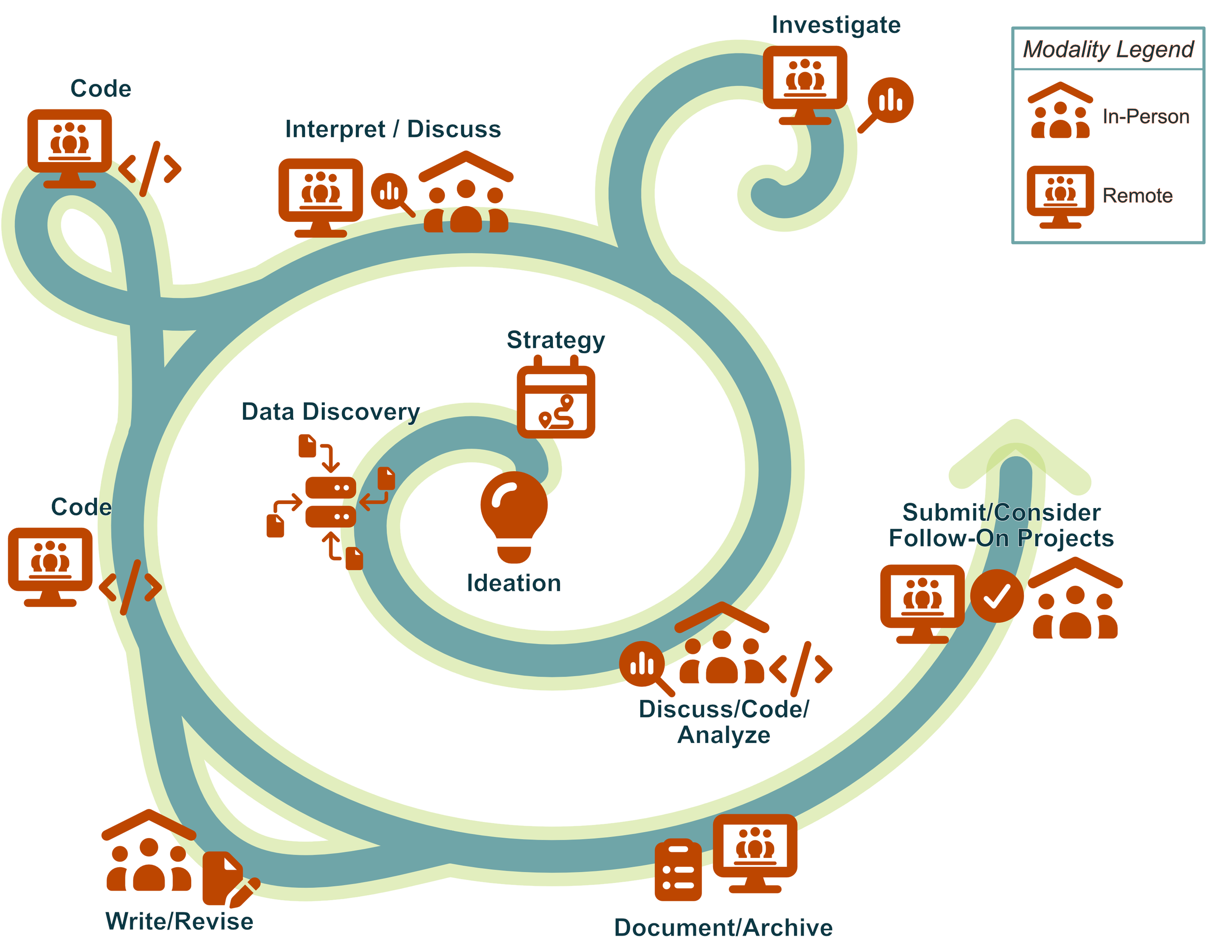
The synthesis process from ideation to completion is rarely linear and often involves detours , side-projects and extensions. Figure credit: Marty Downs and Nick Lyon
Abstract
Team-based synthesis is a collaborative, data-intensive, often interdisciplinary approach to conducting science that capitalizes on existing data to answer novel questions. In ecology, synthesis has advanced understanding about the functioning and structure of ecological and environmental systems. Interest in ecological synthesis has greatly expanded over the past decades due to the increasing volume of accessible data, new collaboration tools, targeting funding calls, and computational workflows that facilitate working with large, complex data. The team-based nature of synthesis fosters human connections and mentorship opportunities that make the work meaningful and enjoyable, but also challenges including harmonizing disparate datasets, coordinating scientists with a range of expertise and backgrounds and managing multi-author projects that evolve over multi-year time spans among others. Here, we have compiled a list of ten simple rules to help team members engage and excel throughout the entire process as they embark on ecological synthesis journeys.